How School Infrastructure NGOs in India Are Closing the Learning Gap
Discover how school infrastructure NGOs in India are transforming underserved classrooms through community fundraising, transparent giving, and measurable learner impact.
EquiBillion Editorial
Content Team
School infrastructure NGOs in India are redefining what it means to support a school — moving beyond brick-and-mortar to fund digital learning tools, inclusive programs, teacher capacity-building, and life skills education. This post explores how verified NGO-school partnerships, transparent fundraising models, and community-driven campaigns are helping underserved schools across India close the learning gap and build futures their students deserve.
Across India, thousands of schools serving low-income and rural communities face a quiet crisis — not a lack of will, but a lack of resources to build the learning environments their students deserve. The gap between aspiration and access is real, but so is the growing movement of NGOs, alumni networks, and community donors working together to close it. When schools, funders, and implementation partners align around a shared mission, the results can be genuinely transformative.
The Infrastructure Gap in Indian Schools: More Than Walls and Classrooms
When most people hear "school infrastructure," they picture construction — classrooms, toilets, boundary walls. But in 2026, infrastructure means so much more. It means access to coding education and AI literacy tools. It means social-emotional learning programs that help students navigate the world beyond textbooks. It means teacher capacity-building so that educators can deliver 21st-century skills with confidence. It means inclusive environments where learners with visual or hearing impairments are not left behind.
Rural schools, low-income urban institutions, and schools serving first-generation learners are disproportionately under-resourced across all these dimensions. A principal in a small town may have dedicated, motivated teachers — and no pathway to fund the programs those teachers need to make a real difference. An NGO leader may have the implementation expertise but lack a trusted channel to connect with school communities at scale.
This is the real infrastructure gap. And closing it requires more than good intentions — it requires structured, accountable partnerships built on trust.
Why NGO-School Partnerships Are the Most Effective Model for Change
The most impactful education interventions in India share a common thread: they are built on genuine partnership, not one-directional charity. When an NGO and a school work together — aligned on goals, accountable to a shared community, and supported by verified implementation — outcomes improve meaningfully for learners.
What makes this model work? Community ownership is central. When alumni networks, parent groups, local businesses, and CSR donors contribute to a campaign they can see and track, they stay invested in its success. When funds reach schools as goods and programs rather than cash, donor confidence increases and the risk of leakage disappears. When outcomes are documented and reported back to every contributor, trust deepens and giving grows.
For school principals evaluating potential partners, this accountability matters enormously. For NGO and foundation leaders, it signals whether a platform is genuinely mission-aligned or simply transactional. The best NGO-school partnerships in India create cycles of trust that outlast any single campaign.
What Transparent Fundraising Actually Looks Like for Schools
Transparency in school fundraising is not simply publishing a number on a website. It means clear campaign objectives, real-time visibility into fundraising progress, verified implementation partners, and post-delivery impact reports complete with photographs, beneficiary stories, and measurable outcomes.
Donors today — whether a school alumnus giving from Bengaluru or a CSR manager in Mumbai evaluating education funding for schools in India — expect accountability before they contribute. They want to know that their money reached the intended beneficiaries, in the intended form, and made a documented difference.
One structural barrier that transparent platforms address is tax compliance. When 80G tax certification is built into the donation process and certificates are issued automatically, a common hesitation among Indian donors is removed entirely.
EquiBillion Trust (Trust Registration: EBT/TRUST/2024/001; 80G Certification: CIT(E)/80G/2024/EBT) operates on a 100% transparency model — every rupee is tracked, publicly reported, and reaches beneficiaries as goods rather than cash. To understand how this model removes friction for donors, read more about transparent school fundraising in India.
From Fundraising Campaign to Classroom Impact: How the Cycle Works
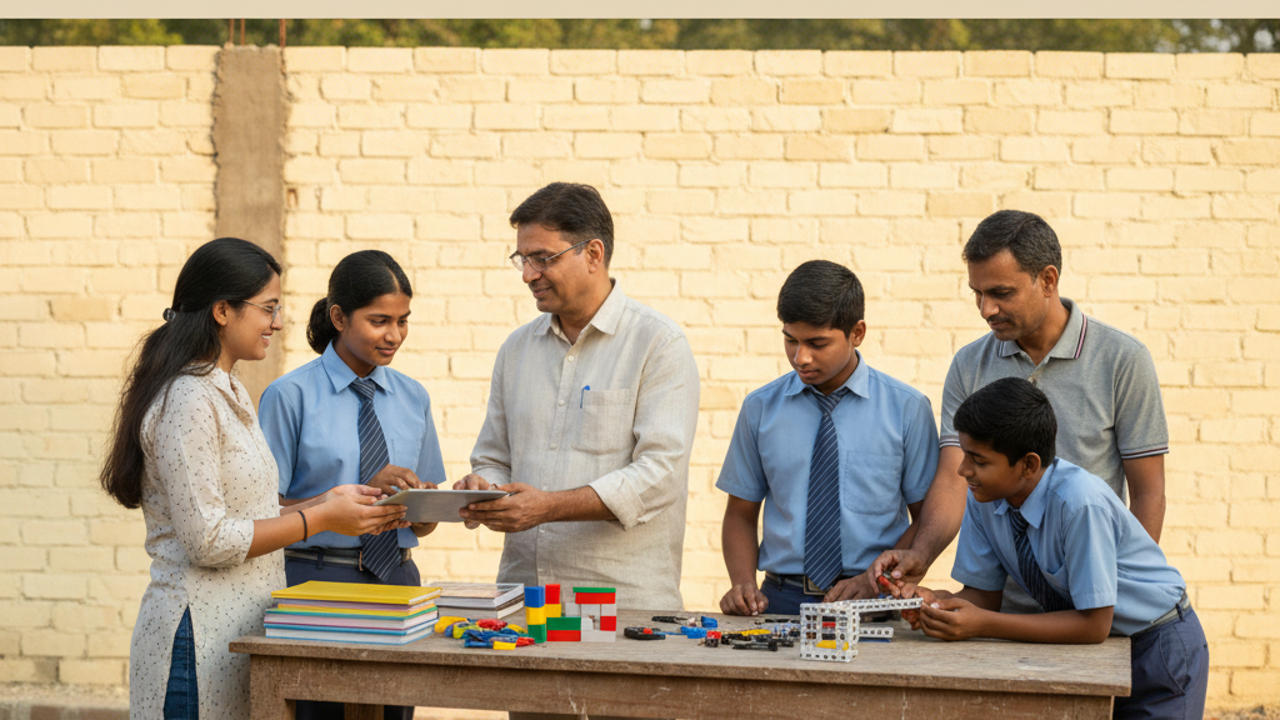
Understanding the full journey of a school campaign helps both principals and NGO partners assess whether a model is genuinely built for impact. The process begins when a school identifies a specific learning need — perhaps coding education for students who have never accessed a computer, or a ProGame Tactile program enabling learners with visual impairments to engage with technology, or financial literacy workshops for first-generation students.
The school creates a campaign with a defined goal and funding target. That campaign is then shared with alumni networks, parents, community donors, and corporate contributors. Once the funding target is reached, the implementation partner — Next Skills 360 EdTech Private Limited — delivers the program, provides teacher training, and offers ongoing implementation support and monitoring.
After delivery, detailed impact reports are published — including photographs, video documentation, beneficiary stories, and measurable outcomes — so every donor sees the direct result of their contribution.
As of June 2026, live school campaigns are already underway in India, marking a meaningful milestone in this direct school-impact model. Learn more about how school donation platforms bridge India's learning gap.
The Causes That Matter Most: Education, Inclusion, and Community Welfare
The most effective school infrastructure NGOs in India understand that real transformation is holistic. It does not begin and end with one program — it extends to the whole child and the whole community.
Through structured school campaigns, institutions can mobilise support for a wide spectrum of causes: AI literacy and computational thinking, coding education, entrepreneurship programs, life skills, social-emotional learning, teacher capacity-building, and emerging technology awareness. For learners who are typically left furthest behind — students with visual or hearing impairments, children in remote rural schools, first-generation learners — inclusive programs like ProGame Tactile ensure that the benefits of 21st-century education reach those who need them most.
The circle of impact can extend further still. Beyond education campaigns, in-kind giving models — such as community donation drives for books, clothing, and food — allow schools and their networks to address hunger, welfare, and material deprivation alongside learning needs. Infrastructure, in this broader sense, means everything a child needs to arrive at school ready to learn and leave it ready to thrive.
What School Principals and NGO Leaders Should Look for in a Campaign Partner
For school principals considering a fundraising campaign, the checklist is straightforward: Is the campaign school-led and specific to your community's needs? Is the implementation partner independently verified? Are donor reports automatic and detailed? Is 80G compliance built in from the first rupee donated? These are not luxuries — they are the foundations of a partnership worth trusting.
For NGO and foundation leaders evaluating transparent school fundraising platforms, the standard must be equally rigorous: Does the platform manually verify partner credentials before listing? Are campaign funds converted directly into goods and programs, with no cash-to-beneficiary leakage? Is impact documentation published consistently and accessibly?
Beyond process, the right partner shares your values — not merely your goals. EquiBillion Trust, co-founded by MIT SOLVE Fellows Suraj Meiyur and Sowjanya Suraj, was established on the belief that a child's future should never be determined by family income, geography, or disability. That founding conviction shapes every campaign, every partnership, and every impact report we produce. When schools, donors, and NGOs align around that shared belief, the collective power to change lives is extraordinary.
Frequently Asked Questions
What does a school infrastructure NGO in India actually do?
A school infrastructure NGO works to bridge resource gaps in underserved schools — going beyond physical construction to fund digital learning tools, life skills programs, teacher training, and inclusive education initiatives. The most effective NGOs operate through verified partnerships, transparent fundraising, and documented impact, ensuring that communities, donors, and schools all remain accountable to each other and to the learners being served.
How can a school principal start a fundraising campaign for infrastructure or learning programs?
A school principal can launch a campaign by partnering with a verified platform that supports school-led fundraising. The process typically involves identifying a specific learning need, setting a clear funding goal, and sharing the campaign with alumni, parents, and community donors. Platforms like EquiBillion Trust guide schools through campaign creation, donor outreach, and post-delivery impact documentation — making the process structured and accessible even for first-time campaign leaders.
Why is transparent fundraising important for education funding in India?
Transparent fundraising builds the donor trust necessary to sustain giving over time. When contributors can see real-time campaign progress, verify that funds reached beneficiaries as goods rather than cash, and receive detailed post-intervention impact reports, they are far more likely to give again — and to encourage others to do the same. 80G tax certification further strengthens confidence by ensuring every donation qualifies for income tax deduction under Indian law.
How does EquiBillion ensure funds actually reach students?
EquiBillion operates on a 100% transparency model — every rupee donated is publicly tracked, and funds reach beneficiaries as educational goods and programs rather than cash payments. Implementation is handled by verified partner Next Skills 360, which delivers programs directly, provides teacher training, and monitors outcomes. Detailed impact reports — including photographs, videos, and measurable results — are published after each intervention so donors can see exactly what their contribution achieved.
What kinds of programs can schools fundraise for through EquiBillion?
Schools can raise funds for a broad range of future-ready learning programs, including coding education, AI modules, computational thinking, financial literacy, life skills, social-emotional learning, entrepreneurship programs, teacher capacity-building, and inclusive programs such as ProGame Tactile for learners with visual impairments. This scope reflects EquiBillion's commitment to whole-child development and to reaching the learners most often left behind by conventional education investment.
If you are a school principal ready to launch a campaign, or an NGO looking to partner with a transparent, mission-aligned platform, visit equibillion.org or write to support@equibillion.org to learn how your community can become part of India's growing education equity movement.